
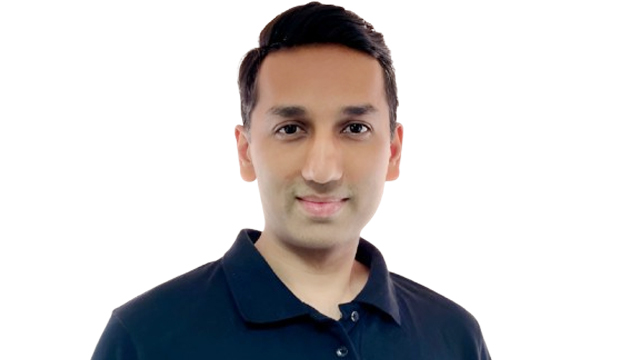
Intro: In the past year when global headwinds, shifting tariffs and fast-changing digital rules are testing India’s technology backbone, AI-expert and tech leader Ketul Sheth shares his vision and a voice of clarity and direction. As Co-Founder and Director of Techcronus, a global IT-firm and NASSCOM and GESIA (Gujarat’s IT/ITES association) partner, Ketul brings frontline insight into how India’s IT sector can navigate volatility through innovation, diversified markets, stronger compliance and people-centric growth. His exclusive interview with senior journalist Mahima Sharma for Indiastat. digs into where India’s next digital leap and resilience will truly come from. Read our Socio-economic Voices of the week, because this is also where the next jobs will be created!
MS: With U.S. tariffs and policy shifts threatening Indian IT exports, what immediate socio-economic risks do you see for mid-size firms and their workforce? How are companies like yours that have deep links with MICROSOFT adapting to maintain competitiveness and mitigate risks?
KS: With rising U.S. tariffs and shifting policy, mid-size Indian IT firms face non-trivial socio-economic risks. Even if software exports aren’t directly taxed yet, reduced overall economic demand in the U.S. could lead clients to cut back on outsourcing budgets, slowing new contract wins, delaying payments or freezing hiring. That’s especially threatening for mid-tier players with narrower margins; they may struggle to sustain workforce levels, invest in upskilling, or maintain cash flow.
Companies like ours, with strong ties to global technology platforms such as Microsoft, are proactively shifting strategies.
First, we are accelerating offshore-delivery models and building robust global-capability centres (GCCs) within India to reduce dependency on on-site delivery or visa-driven work-arounds.
We are also diversifying our client base beyond the U.S. targeting Europe, Asia and other growth markets like the UAE. Thus, revenue isn’t overly concentrated in one geography.
Additionally, we are doubling down on higher-value services like cloud, AI, cybersecurity, managed services, especially where automation and skill matter more than labour arbitrage. This adds resilience because these services are harder to replace, and demand is growing globally regardless of tariffs.
Finally, we are increasing investments in employee skilling and remote-delivery infrastructure to retain talent and stay competitive, even if global demand slows.
In short, I see that the near-term stress may hit mid-size firms hardest. But with smart pivots like diversified markets, upgraded services and lean offshore models, companies like ours with long-term vision can weather the shock and even emerge stronger.
MS: How can Indian IT companies innovate or pivot fast enough to offset lost revenue from U.S. clients and sustain growth in 2025–26?
KS: Indian IT companies have long depended, around 60 % of their export revenues, on U.S. clients. But with U.S. economic uncertainty and shifting outsourcing models, that reliance is a risk. To offset potential revenue losses in 2025–26, firms should:
If firms combine diversification, higher-value services and product-led growth with smart cost and talent management, then India’s IT sector still has a credible shot at sustaining 8-10%% growth in FY26, as projected by analysts.
MS: India’s economy recently posted strong growth — GDP growth for Q2 2025-26 was ~8.2%. How do you see this macroeconomic momentum influencing demand for digital transformation and software services in India and globally?
KS: Good question! Here’s how I see the recent macroeconomic momentum in India — especially the 8.2% GDP growth in Q2 FY26, shaping demand for digital transformation and software services, both domestically and globally.
India’s 8.2% real-GDP growth in Q2 reflects a broad-based surge led by services (+9.2%) and robust private consumption (+7.9%) along with manufacturing and construction gains. This healthy economic environment means across all sectors enterprises now have more cash flows, greater appetite for expansion and renewed confidence to invest in efficiency, scalability and competitiveness.
That translates into a sharp uptick in demand for digital transformation:
Indeed, India’s IT spending is forecast to grow double-digit, with software services and product demand rising markedly. Globally, as Indian IT firms deliver competitive, high-quality services at scale, this macro growth strengthens their value proposition. This would be making them go-to partners for corporations worldwide looking to outsource or co-develop software, AI and cloud projects.
In simple words, strong macro growth gives domestic firms breathing space to modernise and boost global demand for Indian software expertise. This would in turn be accelerating India’s shift from outsourcing hub to digital innovation powerhouse.
MS: Unemployment and labour-force participation have seen shifts like labour participation rates, female workforce participation and sectoral job growth (e.g. in IT, services, non-metro regions) have recently shown some positive signs. In your hiring and recruitment efforts for Techcronus, have you observed growing interest from first-time job-seekers in Tier-II/Tier-III cities? What socio-economic factors are driving that?
KS: Yes, at Techcronus we absolutely see growing interest from first-time job seekers in Tier-II and Tier-III cities. In fact, recent industry data shows that Indian IT hiring in smaller cities jumped over 50% in the first half of 2025.
Why are we seeing this shift? I would reason out in three ways…
First - cost-effectiveness. Hiring and operations costs in small-town hubs are often 25–30% lower compared to big metros.
Second - talent has become more widely distributed. Many graduates from smaller cities are now digitally-savvy and willing to learn — especially with remote-work and hybrid models gaining traction.
Third - improving digital infrastructure, including broadband and cloud capabilities, means even non-metro areas are now viable for complex tech roles.
So yes, beyond cost savings, we see it as a long-term shift: talent is more evenly spread, ambitions aren’t metro-bound any more, and technology gives everyone a fair shot. For companies like ours, that means a better, more diverse and loyal workforce — and for job-seekers, opportunity close to home. In my view, the new Indian tech story won’t just be written in big cities anymore.
MS: A substantial portion of India’s population still faces structural inequality and social-economic disparities (income inequality, rural-urban divides, limited access). How does your company approach this challenge when building solutions for domestic clients or global clients working with Indian teams?
KS: We recognise India isn’t one market, it’s many markets. Roughly 65% of people still live in rural areas and digital access is deeply uneven: only around 37% rural households have the internet, compared to over 70% in cities.
So, when we build solutions - either for Indian clients or global clients working with Indian teams. We begin with inclusion as a baseline. That means designing products assuming limited connectivity, lower-end devices, multilingual support and easy onboarding. We follow DEI (Diversity, Equity & Inclusion) principles, not as a checkbox but as core design values.
On hiring and team-building too, we aim for diversity: people from varied regions, castes, income-backgrounds, genders. This mix brings different lived experiences into our solutions which makes them competitive and relevant.
And when we roll out training or digital-skill programmes, we try to prioritise under-represented communities. That helps bridge structural inequality, not overnight, but step by step. See, after all, business in India has to be all about treating access gaps and social divides as design constraints. And one has to build the technology accordingly, so progress reaches more people, not just a few.
MS: In markets like Dubai or the US/Europe, clients may expect high compliance, data governance and transparency. Do you see Indian socio-economic changes (e.g. rising digital awareness, stronger regulations) helping Indian firms, including yours, become more competitive globally?
KS: Yes, I absolutely see India’s socio-economic changes making our firms far more competitive globally. First, consider scale: as of 2025, India has over 806 million internet users, and rising digital adoption means more people online, more awareness, more demand for safe, compliant services.
On the regulation front, the new Digital Personal Data Protection Act (DPDP) and recently notified rules add strong obligations on data governance, consent and transparency. That pushes Indian firms and not just us, but the whole ecosystem — to build privacy-first infrastructure, compliance teams and governance processes. That’s exactly what many international clients demand today.
Also, domestic demand for digital services is booming. The broader IT and IT-BPM sector is estimated to grow rapidly with the software product industry alone projected to touch around ?8,62,000 crore (~US $100 billion) soon. This structural growth gives firms both volume and experience in handling large-scale, regulated digital services.
So when global buyers look for offshore partners who can deliver robust compliance, data governance, high-volume digital delivery - the Indian firms are no longer just cost-effective. Rather, we are becoming choice partners because we now offer the trust, scale and governance those buyers increasingly require.
MS: For international clients (US, UK, Dubai), India is often a talent-hub due to cost arbitrage. But with improving economic conditions and rising wages, do you see a shift? What socio-economic changes would force Indian outsourcing firms to rethink their value proposition?
KS: India has long ridden the cost-arbitrage wave. But now wages are rising, and labour-cost remains a growing share of expenses. Recent regulatory reforms and inflation mean many firms face 5–15 % higher manpower costs.
At the same time, demand from clients is shifting. They want innovation, speed and quality, not just cheap headcount. Automation and AI are replacing routine coding, testing and support work.
Also, global clients are setting up their own in-house / Global Capability Centres (GCCs), thereby cutting out offshore outsourcing margins.
So the pressure is real. If Indian outsourcing firms don’t re-define their value, cost arbitrage alone won’t keep clients coming. And the value would come from investing in high-end skills (AI, cloud, data), building domain expertise and shifting to outcome- or value-based contracts.
So, yes, socio-economic changes - rising wages, tighter labour rules, inflation, automation and client behaviour - together are forcing a rethink. The firms that survive will be the ones that evolve.
MS: Indian enterprises are suddenly investing more in data migration, data lakes and reporting because government and market regulators demand digital compliance. How does this socio-economic push impact related IT service priorities in India, serving global nations?
KS: You know, we are witnessing a big shift in the IT sector as well as related Automation arenas. Indian enterprises are pouring money into data migration, data lakes, reporting and compliance tools. That change isn’t random. With regulations such as the new data-protection law, firms need local infrastructure to meet compliance demands.
This surge pushes IT services priorities quite sharply.
First, cloud-migration and secure data-warehousing rise high on the agenda. Over 60 % of Indian firms are already transitioning parts of their operations to cloud or hybrid cloud setups, and data-warehousing spend is climbing fast.
Second, the demand shifts from basic maintenance to advanced data-engineering, analytics, compliance audits, encryption and reporting services. That makes India more attractive to global clients who need robust compliance and data-sovereignty standards — and drives up outsourcing engagements from multinational corporations.
Thirdly, there is a rapid expansion of data-centre capacity in India. Oh yes, the country’s infrastructure is scaling to host global workloads. So now Indian IT firms can handle large-scale, regulation-heavy projects for foreign companies.
In the coming two years alone, you will yourself see that the socio-economic push for compliance is re-shaping the Indian IT services industry - from legacy maintenance to secure, scalable, globally relevant data-engineering and cloud solutions.
MS: Dubai’s recent 2025–2030 digital strategy aims for AI-first government and cloud-first enterprises. How will this be changing the type of projects Indian companies like yours will receive from the Middle East? What cautions and steps have to be taken in this regard, to stay competitive?
MS: You look at Dubai now and you see a full-blown digital makeover — AI at the core, cloud for enterprises, data-driven governance. That means for Indian IT firms like ours, the kinds of projects we get from the Gulf will change dramatically. It won’t just be offshore support or legacy migrations. Instead we will be tapped for cloud-native platforms, generative-AI applications, data-analytics tools, smart-city systems and end-to-end digital-transformation work.
When I was at the GITEX Global 2025 in Dubai in October, 2025 the buzz was real — major hyperscale data-centres from global players, sovereign-cloud frameworks launching, and Gulf-wide push for AI-first government services. Every ministry showcased AI use-cases. Telecom operators announced new sovereign-cloud capabilities. Startups were pitching automation for logistics, finance, retail and energy. And large enterprises were openly saying they want partners who can scale AI safely, not just write code.
For Indian companies to stay competitive, we can’t just sell code or manpower. We must build cloud-agnostic architecture skills, strong cybersecurity & compliance chops, and domain-centric AI expertise. We also need to follow data-sovereignty and regulatory norms carefully, because the UAE is building “sovereign cloud” infrastructure to host sensitive data locally.
The Middle East won’t just outsource - they’ll outsource strategy, architecture and innovation. Indian firms must evolve accordingly.
MS: Coming to the last question, in the last 4–5 months, Indian SMEs have shown a spike in CRM adoption due to GST data transparency and digital finance. How has this influenced/ will affect the domestic market strategy of a firm like yours?
KS: Over the last few months, Indian SMEs have started adopting CRM and other digital tools in a big way. Thanks to GST & digital finance, CRM is no longer a luxury for Indian SMEs, it's becoming a baseline.
A recent survey shows over 73% of MSMEs reported growth in income or efficiency from using digital tools like UPI and smartphone-led operations. For a firm like ours, this means the domestic market is transforming fast. And firms like ours must adapt to serve that baseline or risk irrelevance. Because….
Customer data is cleaner and more reliable. Firms are moving from ledgers or spreadsheets to real-time dashboards. That makes our CRM-based offerings far more relevant and valuable.
Demand for integrated enterprise tools is rising. SMEs are now open to cloud-based ERPs, CRM, finance-stack tools because digital compliance (GST, e-invoices) forces structured processes.
This digital shift lowers barriers for smaller players too. So, our market strategy shifts: we need to offer affordable, easy-onboarding CRM/ERP tools — packaged for SMEs — and focus on user-education and support.
About Ketul Sheth
Ketul Sheth serves as Co-founder & Director at Techcronus Business Solutions, India and also managing Techcronus group companies in USA and Australia. Under his leadership and experience of 15+ years, Techcronus has built strong credentials as a Microsoft and Salesforce Partner, specialising in ERP/CRM, Process Automation, AI and cloud-based enterprise solutions. An expert voice on AI and Innovation, partnering with NASSCOM and GESIA (Gujarat’s IT/ITES association), since last one decade he has played a key role in advising Indian and global SMEs on large-scale digital transformation, AI-driven automation and technology modernisation to accelerate enterprise-wide growth and efficiency. Armed with an MBA in IT sector and several certifications from Microsoft, Ketul has been representing Indian IT firms in global events like Directions EMEA 2023 in Lyon, France and GITEX Global in UAE.
About the Interviewer
Mahima Sharma is an Independent Senior Journalist based in Delhi NCR with a career spanning TV, Print, and Online Journalism since 2005. She has played key roles at several media houses including roles at CNN-News18, ANI, Voice of India, and Hindustan Times.
Founder & Editor of The Think Pot, she is also a recipient of the REX Karmaveer Chakra (Gold & Silver) by iCONGO in association with the United Nations. Since March 2022, she has served as an Entrepreneurship Education Mentor at Women Will, a Google-backed program in collaboration with SHEROES. Mahima can be reached at media@indiastat.com
Disclaimer : The facts & statistics, the work profile details of the protagonist and the opinions appearing in the answers do not reflect the views of Indiastat or the Journalist. Indiastat or the Journalist do not hold any responsibility or liability for the same.
"India’s Food Resilience Demands FPOs to Evolve: Climate Risk Must Be a Core Strategy"... Read more










.png)